
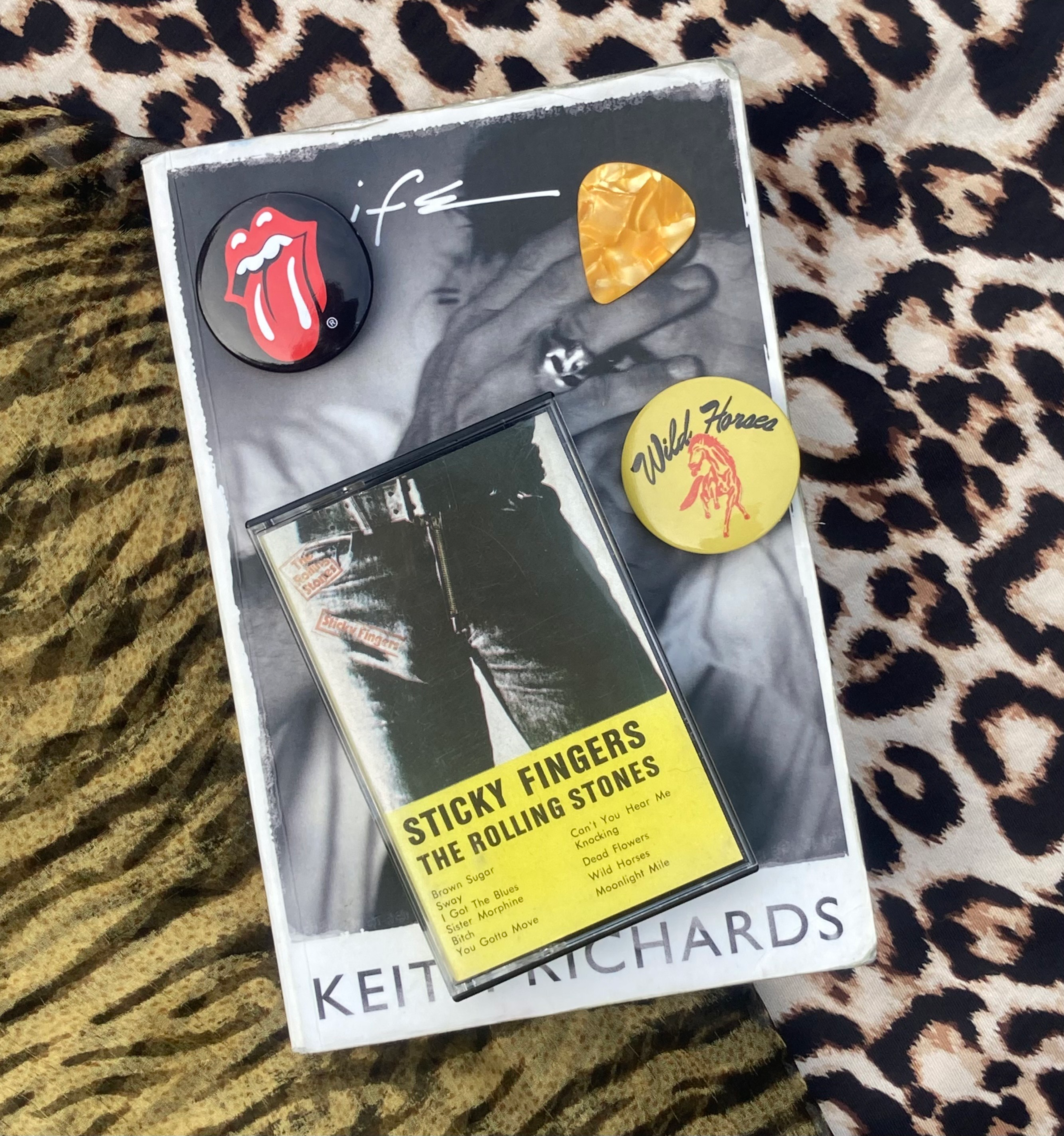
Cover Art
Andy Warhol created the cover, and Craig Braun designed it. It features a close-up of a man’s groin in tight jeans, with the outline of the penis clearly visible through the fabric.
Although no one has confirmed the model’s identity, several men in Warhol’s circle claimed to be the well-endowed figure featured.
Early editions of the album included a functioning zipper on the jeans, which allowed listeners to pull it down and reveal underwear material beneath — a bold and provocative choice.
Franco’s regime banned this version of the cover in Spain, deeming it obscene and inappropriate. Instead, Spanish editions featured an alternate design: fingers emerging from a can of treacle (see image below).

Historical Context
The Rolling Stones released Sticky Fingers in 1971, marking a turning point for the band. It was their first studio album after the tragic death of founding guitarist Brian Jones in 1969. Jones had not only contributed creatively but also named the band.
The album arrived shortly after the Altamont Free Concert tragedy, where chaotic and dangerous security provided by the Hells Angels resulted in the deaths of four people. That event cast a long, dark shadow over the band’s image, and Sticky Fingers became part of their reinvention.
The group also ended its business relationship with Allen Klein and ABKCO Records. From then on, The Stones gained greater creative and financial control over their music — starting a new era of independence.
John Pasche designed one of rock history’s most iconic visuals with the Lips and Tongue logo on this release. The logo became synonymous with The Rolling Stones’ identity and brand going forward.
Musically, Sticky Fingers includes some of their most enduring tracks, such as “Brown Sugar” and “Wild Horses,” blending blues, country, and swaggering rock into a signature 1970s sound.

Track List
Side A –
- Brown Sugar
- Swagger
- I Got Blues
- Sister Morphine
- Bitch
- You Gotta Move
Side B –
- Can’t You Hear Me Knocking?
- Dead Flowers
- Wild Horses
- Moonlight Mile

My Favourite Track
One of the standout tracks for me is “Wild Horses.” It feels like a soft country ballad, stripped down with a more acoustic and exposed sound. Keith Richards plays a signature bluesy guitar solo that perfectly complements its mood.
The chorus, “Wild horses couldn’t drag me away,” reportedly came from a phrase actress and singer Marianne Faithfull said to Mick Jagger. She was in a relationship with him between 1966 and 1970 and spoke those words after waking from a drug-induced coma following an overdose. Faithfull later covered the song herself in 1990.
I also love the physical character of this cassette — age and use have beautifully faded it, and the sticker peels at the corners, giving it unique vintage charm. The clashing yellow and red colours catch the eye and strongly recall the Pop Art style Andy Warhol popularized in the ’70s.

Format
- Type 1 – Ferric Oxide.
- J-card is blank on the reverse side.
Production.
- Album originally released in 1971; this cassette edition dates from 1972.
- Produced by Jimmy Miller.
- Sold over 22 million copies worldwide.
- Cassette manufactured and recorded in Germany by Kinney Music GmbH.
- Distributed by WEA Musik GmbH, a Warner Communications company.
- Released by A COC Recording Corp. USA.