
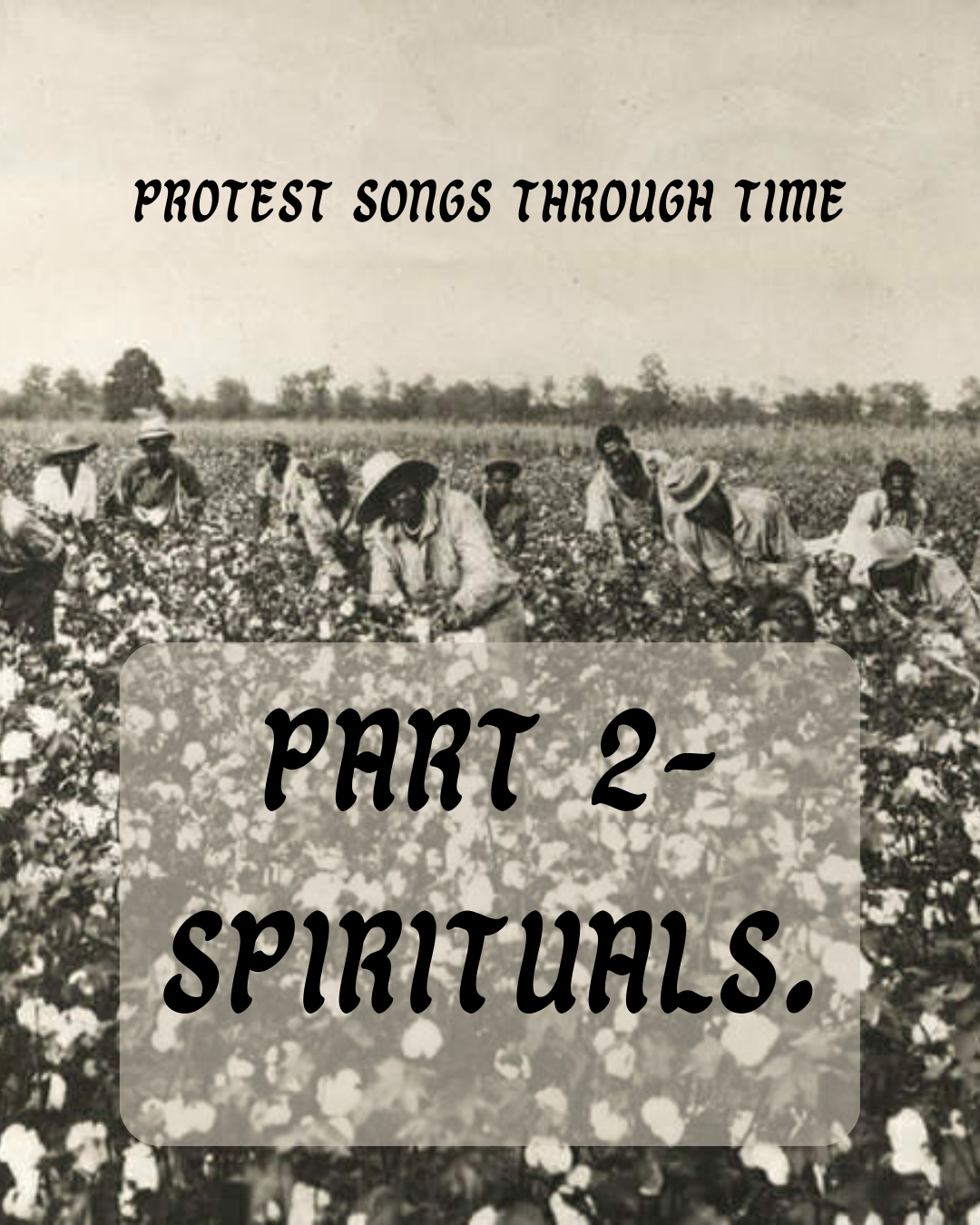
Roots in Resistance
When enslavers stole African people from their homeland and brought them to America, they forbade them from speaking their native languages or practising their religions. However, this didn’t stop them. They organised secret meetings, where they sometimes performed Ring Shouts. In these gatherings, they formed a circle and moved counterclockwise while singing, clapping hands, and stomping feet to create music.
The Birth of Spirituals
Ring Shouts typically included key elements like call and response, which united voices and blurred the line between performer and audience—something rarely seen in Western music at the time. Since they lacked instruments, they used their bodies to produce percussion, driving the rhythm. Additionally, the melodies often featured flattened “blues notes” and polyrhythmic beats.
As the enslaved encountered Christianity, many found a deep connection in certain Bible stories—such as Moses and the Red Sea or the Prophet Elijah. They passed songs down orally, with lyrics shifting depending on who was singing. Over time, biblical stories wove their way into the lyrics, forming what we now call Spirituals.
Messages from the Underground Railroad
Plantation owners often encouraged singing, believing it boosted productivity. However, they rarely understood the lyrics, especially when sung in Gullah, an English-based Creole dialect spoken primarily by enslaved persons. Many spirituals included coded language. For example, Follow the Drinking Gourd contained secret messages. Biblical references—like the Red Sea or the Jordan River—became metaphors for the Ohio River, a key crossing point along the Underground Railroad. Notably, Harriet Tubman used this route to lead around 70 enslaved people to freedom.
The Legacy of Swing Low, Sweet Chariot

In the 19th century, Wallace Willis—a formerly enslaved man who had gained his freedom—likely composed Swing Low, Sweet Chariot. The song later reached wider audiences through the Fisk Jubilee Singers (pictured above), a group of Black students from Fisk University. In 1871, they toured along the Underground Railroad, performing a cappella to raise money for their education. Two years later, they brought their voices to Europe in a landmark tour.
The song expresses a longing for freedom. The “chariot” probably refers to the one that carried the Prophet Elijah to heaven, while the line “I looked over Jordan and what did I see?” likely alludes to the Ohio River and the escape to freedom. Depending on interpretation, the song could serve as a cry for liberation from slavery—or a yearning for spiritual freedom in the afterlife. The Fisk Jubilee Singers made the first recording of Swing Low in 1909 layering harmonies in a rich, soulful rendition. I personally learned it as a round in primary school.
More Than Just Melodies
Spirituals were a form of defiance. They helped enslaved people preserve their beliefs and traditions while adapting to new ones. More than just music, they offered comfort, unity, and a way to communicate and organise. Although slavery confined them physically, it could never imprison their spirit.
Moreover, spirituals laid the groundwork for musical genres such as Jazz, Blues, R&B, and Gospel—genres that arguably form the backbone of modern music.
Honourable Mentions:
- Go Down, Moses
- Nobody Knows the Trouble I’ve Seen
- Steal Away
Coming Next Week: Protest Songs of the 20th Century
In my next post, I’ll explore songs that protested war throughout the 20th century—from World War ballads to Vietnam-era anthems and beyond.