
Introduction
One of my A-Level English Language coursework assignments was to write about a subject of my choosing and how it had changed over time. It comedised with my discovering Green Day’s cover of Working Class Hero and its music video featuring survivors of Darfur (which I’ll explore in a later instalment). The impact it had on me was profound, and it inspired me to explore the history of protest songs.
Although the original essay has been lost to time, I often look back and think I could have done better—so here I am. Today’s version won’t focus heavily on comparison, but the topic remains painfully relevant today, in an era where new conflicts seem to erupt daily and society feels increasingly Orwellian. I’ll present this project in separate parts, organized by subject and time period.
The word protest has three definitions, but the one that matters here is: “A statement or action expressing disapproval or objection to something.”
The Beginning
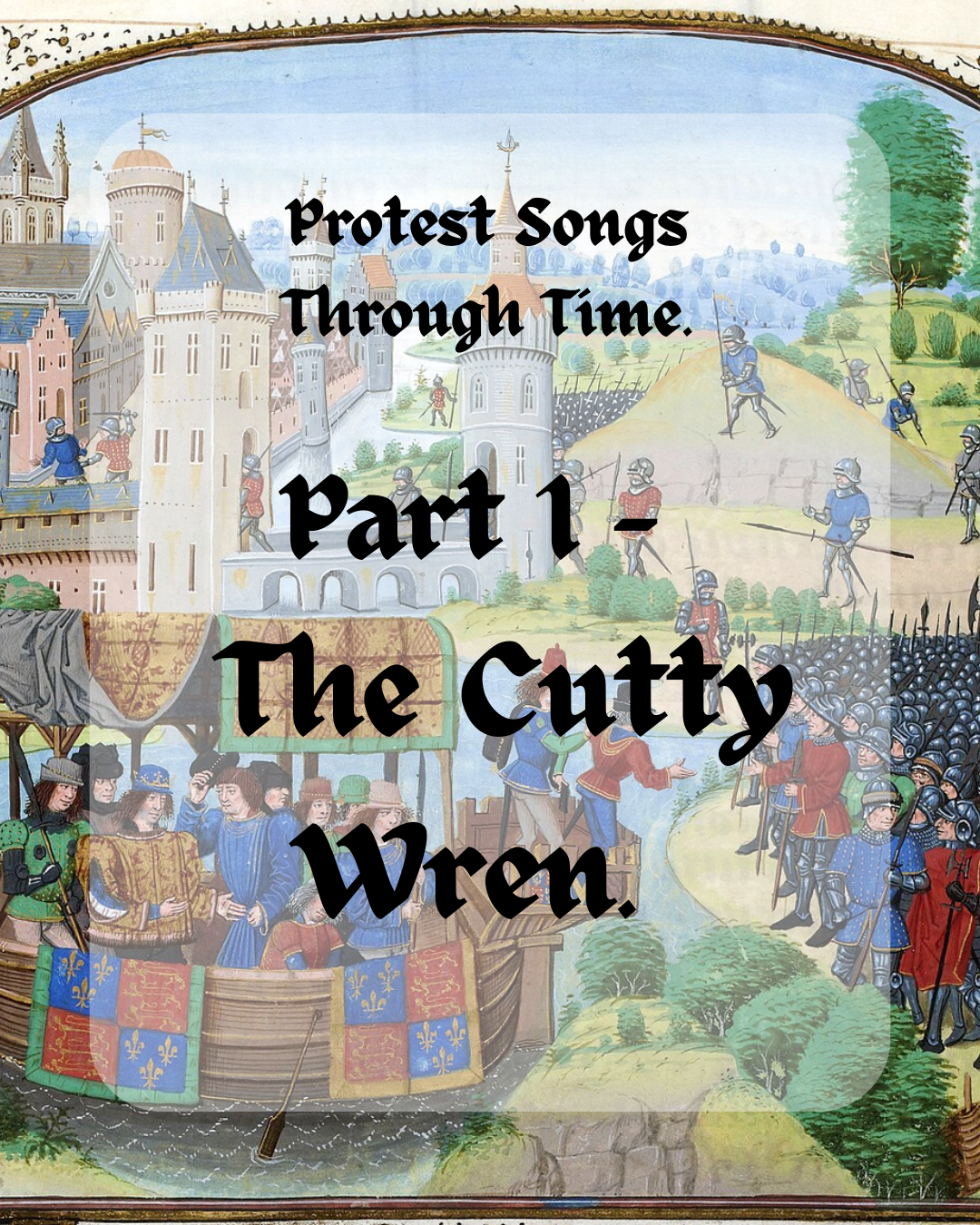
The oldest recorded protest song is The Cutty Wren, believed to have originated in the 1300s during the Peasants’ Revolt in England. During this period, agriculture drove most of the nation’s wealth, but the class divide was staggering. Landowners amassed great riches while the labourers who worked the land lived in near-slavery conditions.
The Peasant’s Revolt
Tensions peaked in 1381 when the government raised the Poll Tax to one shilling per adult—an amount expected from everyone regardless of income. For landowners, it was affordable. For peasants, it equalled roughly a week’s wages.
In June that year, 100 peasants stormed Cressing Temple in Essex, home to Lord Cresson, who held the King’s treasures. They looted and burned most of the estate, leaving only a couple of original barns still standing today. News of the uprising spread quickly, sparking revolts from Somerset to East Anglia, and from Yorkshire to Kent.

The Cutty Wren describes a communal hunt for a wren and the sharing of its meat. Many interpret the song as a metaphor for democracy: the act of hunting together symbolizes collective action and shared voices, while the sharing of the bird represents the redistribution of wealth. Given the song’s age, it’s difficult to confirm this interpretation, but the symbolism remains powerful.
Far Cry From Success
Although the revolt only partially succeeded—many promises made to pacify the protesters were later broken—it did lead to the scrapping of the Poll Tax for the remainder of the medieval period. The uprising also contributed to rising peasant wages and greater freedom of movement. But perhaps its most lasting impact was psychological: it gave future generations a model of resistance, a reminder that they could and should stand up for their rights.
Lyrics
Oh where are you going said Milder to Moulder
Oh we may not tell you said Festel to Fose
We’re off to the woods said John the Red Nose
We’re off to the woods said John the Red Nose
And what will you do there said Milder to Moulder
We’ll shoot the Cutty wren said John the Red Nose
And how will you shoot us said Milder to Moulder
With bows and with arrows said John the Red Nose
Oh that will not do said Milder to Moulder
Oh what will you do then said Festel to Fose
Great guns and great cannon said John the Red Nose
And how will you fetch her said Milder to Moulder
Oh we may not tell you said Festel to Fose
On four strong men’s shoulders said John the Red Nose
Ah that will not do said Milder to Moulder
Oh what will do then said Festel to Fose
Great carts and great wagons said John the Red Nose
Oh how will you cut her up said Milder to Moulder
With knives and with forks said John the Red Nose
Oh that will not do said Milder to Moulder
Great hatchets and cleavers said John the Red Nose
Oh how will you boil her said Milder to Moulder
In pots and in kettles said John the Red Nose
O that will not do said Milder to Moulder
Great pans and large cauldrons said John the Red Nose
Oh who’ll get the spare ribs said Milder to Moulder
We’ll give ’em all to the poor said John the Red Nose
Coming Next Week: Rooted in Resistance – Spirituals.
In the next instalment I’ll be discussed the birth and legacy of the Spirituals sung by enslaved people working plantations during the 17th Century.