
Growing up, I was a huge Marilyn Manson fan; his music helped shape the person I am. In 2021, women began coming forward with allegations of sexual and physical abuse. I tore down my posters, hid my t-shirts, and stopped listening to his music. I felt angry, betrayed, sad – not just for his victims, but for myself.
Since then, I’ve been attempting to navigate the minefield of ethically consuming art, especially music.
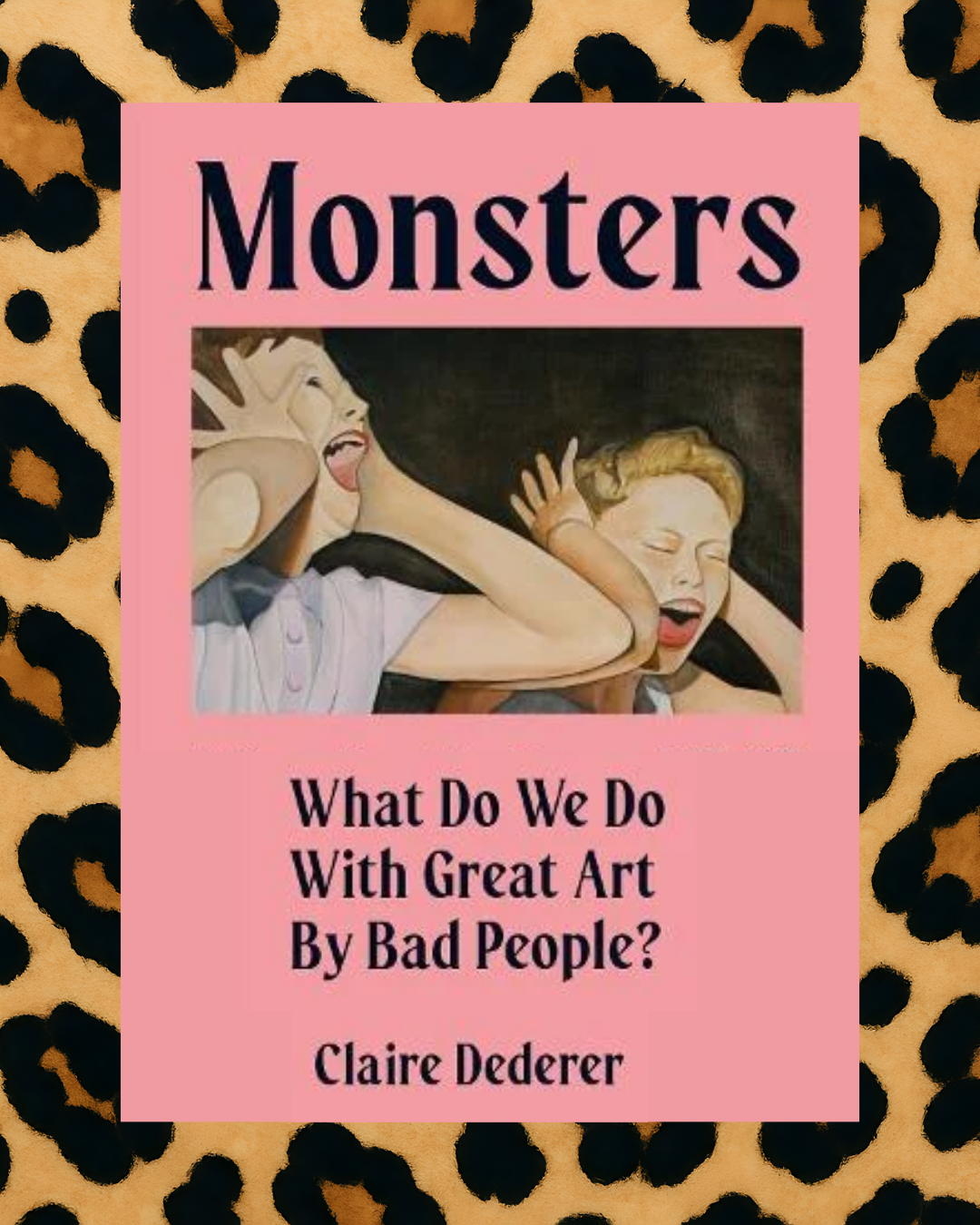
I picked up Claire Dederer’s book Monsters: What Do We Do with Great Art by Bad People?hoping it would give me all the answers, and it did, in a way. I found it difficult to read at times, as some of the language was out of my vocabulary (have a highlighter and pencil at the ready). But once I adjusted to the rhythm and voice, I was able to really sink my teeth into it.
Coming across like the memoir of an art lover, it takes you through the work and biographies of some of the most monstrous creatives of all time: Polanski, Picasso, Woody Allen, etc., while taking into account the social norms of their time, gender, and how this affects the perception of them and their work. It taught me a lot about some artists that I hadn’t heard of, such as the tragedy of Ana Mendieta, as well as insights on the lives of others I was aware of. For example, I hadn’t known that Joni Mitchell had given her daughter up for adoption in order to follow her dreams.
The focus question – What Do We Do with Great Art by Bad People? – has no definitive answer, simply because “the way you consume doesn’t make you a bad person, or a good one.” And ultimately, it isn’t the job of the consumer to police the artist; it should be down to the industry itself. What really helped it click for me were the parallels drawn with the concept of recycling and lowering your personal carbon footprint (which I am passionate about). The corporations who contribute the most to the production of waste have handed a chunk of the responsibility to the consumer with an “every little helps” facade when in reality, the impact the consumer has is minute in comparison to the manufacturers.
The section on female artists fell short for me. It focused mainly on the fact that the worst thing a woman could do in the eyes of society is to abandon their children in the ‘selfish’ pursuit of art. I agree that abandoning your child is a terrible thing to do, but it left me wanting more representation for women outside of their motherhood from Dederer. (Note – I understand part of the point is that society is trained to believe that the most important job a woman has is to be a mother and the double standard that attitude creates.) On a certain level, I believe that the industry often considers women as problematic for simply being artists in the first place. However, I don’t think that should take away from female artists who have shady pasts. For example, Coco Chanel became involved with a high-ranking German intelligence officer during WW2, ultimately becoming an intelligence operative for the Nazis.
On the whole, I did find the book thought-provoking. Having a conversation about this topic in a room full of people can at times be overwhelming because everyone has their own personal limits and appreciations of art. So being able to sit with a book and your own thoughts is valuable. I also think that this conundrum is an inevitable one: art is created by humans, and humans are messy, flawed – some are even monsters. It’s a terrible situation, but without art, would we really be human?

Notable Quotes
“A fan, on the other hand, is a consumer plus, a consumer beyond, a consumer who is being consumed. She steals part of her identity from the art, even as it steals part of her identity from the art, even as it steals its importance from her. She becomes defined by the art. A fan has a special role and bestows upon herself a special status.”
“Consuming a piece of art is two biographies meeting; the biography of the artist that might disrupt the viewing of the art; the biography of the audience member that might shape the viewing of the art. This occurs in every case.”
“To say someone else is consuming improperly implies that there’s a proper way to consume. And that’s not necessarily true. When we ask “what do we do with the art of the monstrous men?” we are putting ourselves into a static role – the role of the consumer. Passing the problem on to the consumer is how capitalism works.”
“It is easier to imagine the end of the world than the end of the patriarchy.”
“The violence or self-harm of the female artist can be a sign of sensitivity, a sign of lunacy, but it rarely turned inside out to become a sign of creative and moral strength.”