
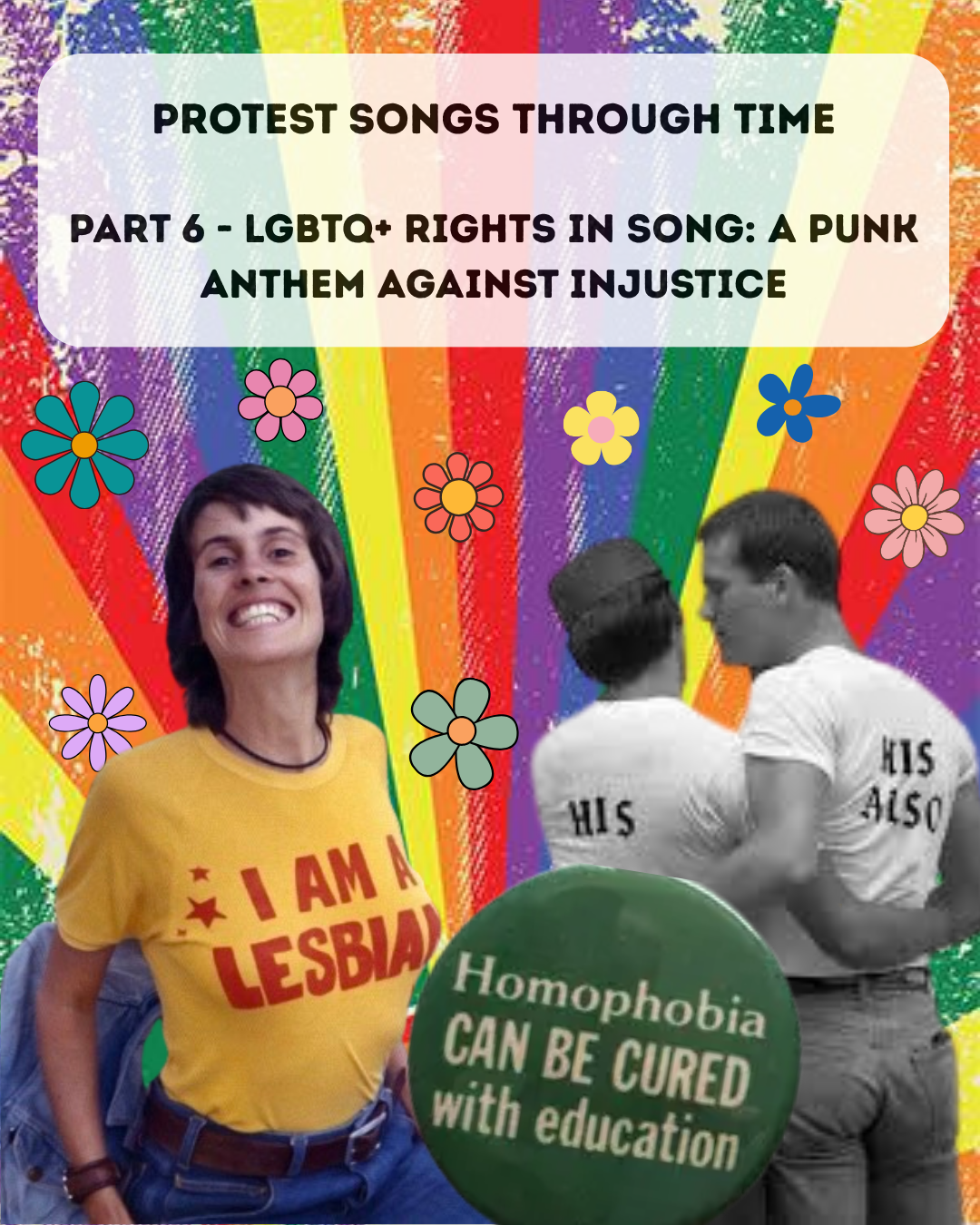
The Winter of Discontent—and Ongoing LGBTQ+ Struggles
The Winter of Discontent, from 1978 to 1979, saw widespread strikes across private and public sector unions as they demanded pay rises that exceeded the limits set by Prime Minister James Callaghan. But this wasn’t the only unrest during the period—especially for the LGBTQ+ community. Although homosexuality had been partially decriminalised in 1967, “homosexual acts” were only legal between two consenting adults over the age of 21 and only if conducted in private. Full decriminalisation for people loving one another wouldn’t come until the year 2000.

Despite this limited legal progress, homophobia remained widespread. The LGBTQ+ community had little protection from the police. Individuals were regularly arrested, subjected to police brutality, abuse, and wrongful charges—often for public displays of affection or simply existing—under vague accusations such as “breaching the peace” or “gross indecency.”
“Glad to Be Gay”
Inspired by the bold, rebellious sound of the Sex Pistols, the Tom Robinson Band first performed “(Sing If You’re) Glad to Be Gay” at London’s first Gay Pride parade in 1976. Originally intended as a one-time performance, the song struck a chord and was officially recorded and released two years later. The lyrics criticised the hypocrisy faced by the gay community and their lack of public support or protection. One verse begins with, “The British police are the best in the world, I don’t believe one of these stories I’ve heard // picking up people and knocking them down,” emphasising how the public often ignored the violence inflicted on LGBTQ+ individuals.
Media Double Standards: The Gay News Trial
The song also addressed the prosecution of Denis Lemon, editor of Gay News, who had published a poem titled The Love That Dares to Speak Its Name. The poem described a centurion performing sexual acts on the crucified body of Jesus Christ. Mary Whitehouse, a conservative campaigner, brought a private prosecution for blasphemous libel—the first such charge in the UK since 1921. Lemon ultimately received a suspended sentence. Robinson commented on this through the lyric, “There’s no nudes in Gay News, our one magazine, but they still find reasons to call it obscene,” drawing attention to the hypocrisy of media regulation—especially considering newspapers like The Sun, which regularly featured topless women on page 3 and were never prosecuted.
AIDS, Fear, and Evolving Lyrics
In 1987, Robinson, who identifies as bisexual, updated the song’s lyrics in response to the ongoing AIDS crisis and the damaging claim that it was a “gay disease.” He sang, “Now there’s a cancer to blame on the gays, it’s brutal and fatal and slowly invades,” highlighting the fear-driven narrative and discrimination faced by the LGBTQ+ community at the height of the epidemic.

Banned by the BBC, Remembered by History
The BBC banned “Glad to Be Gay” due to its explicit references to police abuse, censorship, and homophobia. Despite this, it became a defining anthem of queer resistance. While LGBTQ+ rights in the UK have made significant progress since the 1970s, the community continues to face ignorance and violence—not just in Britain, but worldwide.
Honourable mentions –
- ‘Born This Way’ – Lady Gaga
- ‘Same Love’ – Macklemore & Ryan Lewis
- ‘Make it Stop’ – Rise Against
- ‘Standing in The Way of Control’ – Gossip
Coming Next: Anthems of Change: How Modern Protest Songs Challenge Power in the 21st Century.
In the next instalment we’ll investigate how System of a Down and Green Day have used their voices and platforms to highlight injustice.