
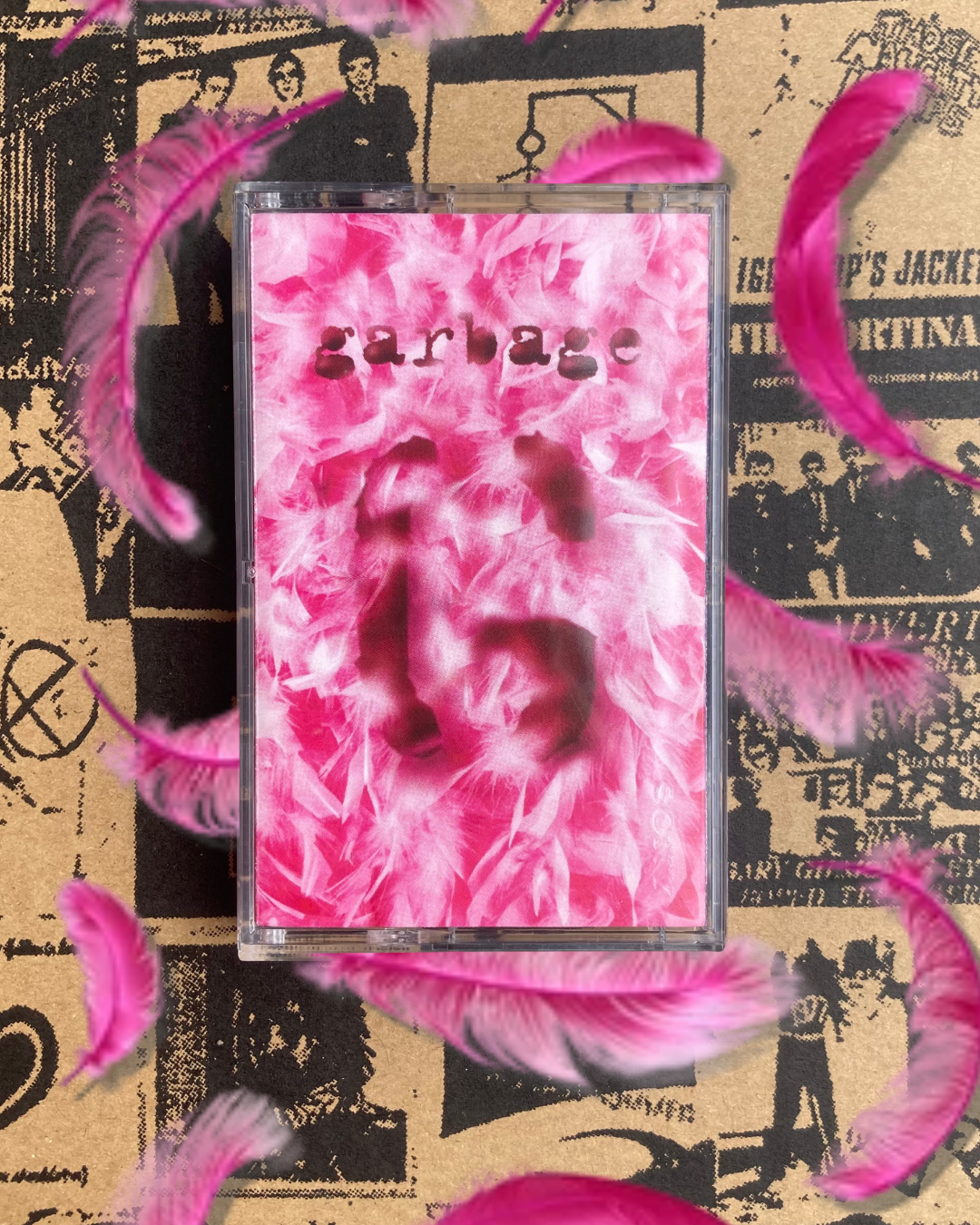
Cover Art
The pink feathered album cover was photographed by Stéphane Sednaoui, with the band providing creative direction. Its bright, vibrant yet simple design, along with the band’s logo, serves as a striking, distinctive image — much like the band itself.
The J-card features a black-and-white photo of the band, taken by Clifford Lecuyer. The band are shown covering their faces behind singer Shirley Manson, who stretches her mouth to pull a face at the camera. This conveys a playful, childish impression, helping them feel fun and relatable. The reverse side sports quotes from each song set against different, multicoloured backgrounds. These bright images follow on nicely from the cover image — a very typical ’90s aesthetic.

The J-card features a black-and-white photo of the band, taken by Clifford Lecuyer. The band are shown covering their faces behind singer Shirley Manson, who stretches her mouth to pull a face at the camera. This conveys a playful, childish impression, helping them feel fun and relatable. The reverse side sports quotes from each song set against different, multicoloured backgrounds. These bright images follow on nicely from the cover image — a very typical ’90s aesthetic.

Historical Context
Garbage was the band’s debut album, released in 1995. Formed by Butch Vig, Steve Marker, and Duke Erikson — who were already established producers — the band introduced Shirley Manson after seeing her perform with her former band, Angelfish. Manson’s voice brought an in-your-face, unique female perspective to the predominantly male alt-rock scene of the mid-’90s. The album would feature some of their most well-known songs, including Stupid Girl, Only Happy When It Rains, and Queer.

Track List
- Supervixen
- Queer
- Only Happy When It Rains
- As Heaven Is Wide
- Not My Idea
- A Stroke of Luck
- Vow
- Stupid Girl
- Dog New Tricks
- My Love’s Box
- Fix Me Now
- Milk
My Favourite Track
Queer is the best track on this album, in my opinion. It’s full of atmosphere, and Manson’s voice is full of flirtatious whisper. Vig would later say the song was inspired by the book Brotherly Love by Pete Dexter. The story follows the effect the mob has on the life of a young boy and his friends. In one chapter, a father takes his son to a brothel and pays to have his virginity taken by a sex worker. After the act, the boy comes to the realisation that the woman he’s just had sex with also services his father — “This is what he pays me for. Like father, like son.”
Manson seduces the listener throughout, purring: “You can touch me if you want.” — Yes, please.

Production
- The album was produced by the band itself, being that four of the five members were working as producers previously.
- Sold over four million copies worldwide.
- Type 1 – Ferric oxide.