
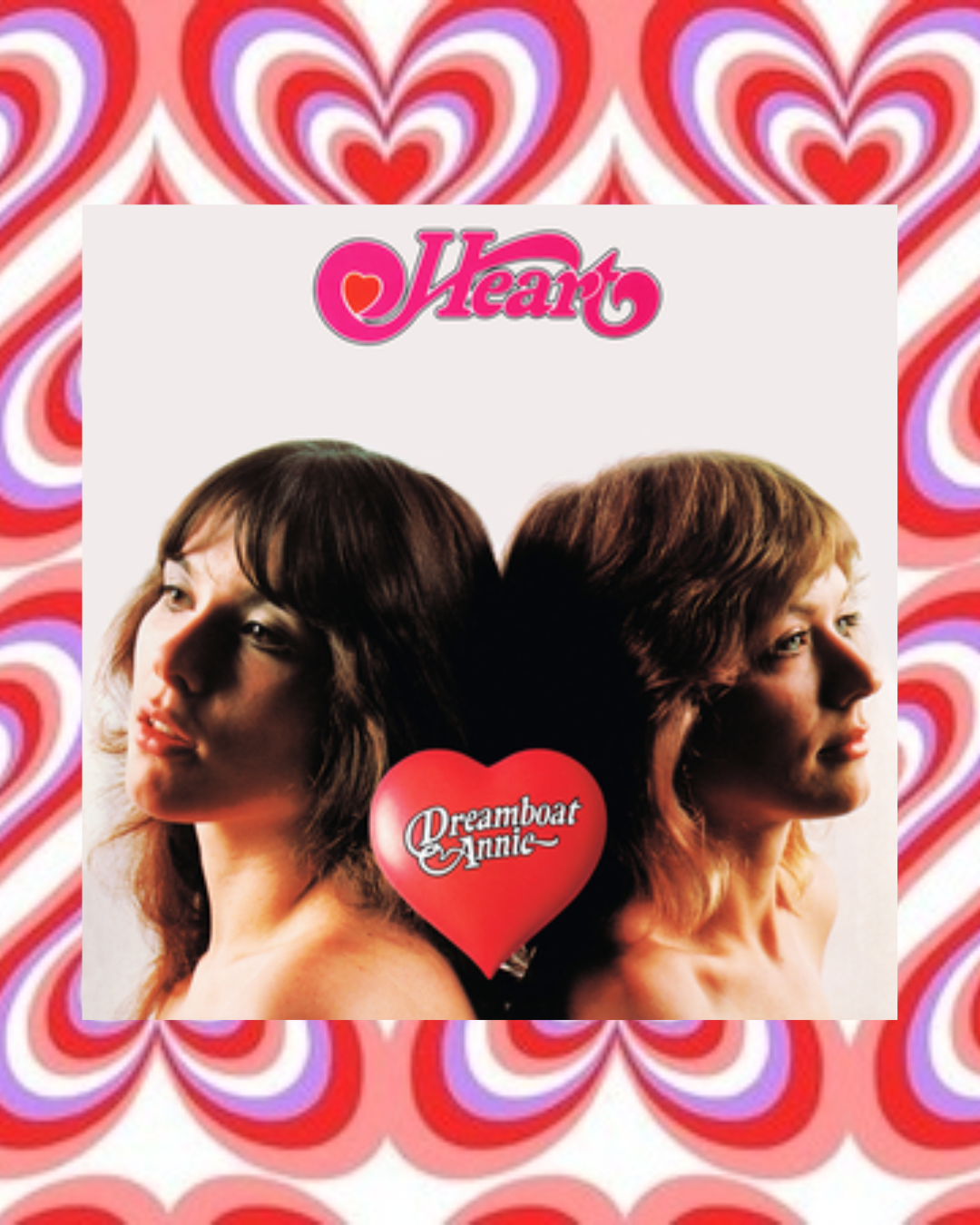
Through the haze of Nag Champa, Heart crash-landed in 1975 with their debut album, Dreamboat Annie. Formerly known as The Army, they brought in two new recruits: sisters Ann Wilson, with her raging lead vocals, and Nancy Wilson, shredding on guitar. As a new group on the scene, they showcased their versatility through a concertina of electric and acoustic tracks, combining rock with a sprinkle of folk and a dash of country. Peaking at #7 on the US charts, this would become one of their best-grossing albums and go on to be featured in pop culture as an embodiment of ‘70s seduction.
They meant business right from the start with Magic Man – opening with howling intro chords as Ann tells the tale of how drummer Michael DeRosier persuaded her to join the band: “Come on home, girl,” he said with a smile.” Roger Fisher (lead guitarist) and Nancy tag-team the thunderous guitar solos, the high notes almost mimicking Ann’s howl, creating a powerful fusion. The trippy synth solo, courtesy of Howard Leese, brings a spacey element, incorporating Fleetwood Mac-esque chimes that add whimsy and lead to a false ending. Just when you think it’s all over, an additional chorus hits. There aren’t many albums that start this strong.
Next, we get a taste of their softer acoustic side with Dreamboat Annie (Fantasy Child) – a teaser of the full title track to come. It’s a complete 180 from the loud, proud opener. Nancy showcases her fluid, dreamy fingerpicking. Just as you catch your breath, the tempo rises, and Crazy on You blows the bloody doors off. Between the power riffs, Nancy continues her delicate picking, adding contrast and depth against the band’s brash, electric drive. The song drips with passion—Ann shrieks in ecstasy, confessing that all she wants is to forget about “the bombs and the Devil” in the throes of desire. This could reference the Vietnam War, which had raged through the ’70s and caused deep unrest among the younger generation in the US. Whatever the intention, I’ll have what she’s having.
Like standing on the beach with a hangover, Soul of the Sea brings you back to your senses. Its sweet, docile tone begins with silky folk elements and a string section, but it evolves into a proggy journey as ghostly harmonies and swelling strings rise. It reminds me of The Beatles’ 1967 A Day in the Life, incorporating real-life sound samples like chattering voices and typewriters before returning to ocean waves and tender vocals.
The title track could easily be mistaken for a Led Zeppelin number, flowing seamlessly from Soul of the Sea but with a thicker sound and heavier bass. A surprise banjo adds a cheerful, country layer without feeling too light-hearted. The mellow vocals float over bright, major-key melodies that feel jumbled but never mismatched. It’s very different from the rest of the album – but it works. I also love when the title track appears right in the middle of an album; that’s where it belongs.
Ann kicks men out of her bed in White Lightning & Wine, driven by pounding bass drums and a cowbell. “In the morning light, you don’t look so right, guess you better hitchhike home.” (I guess she had her beer goggles on.) These bold lyrics likely caused a stir at the time, as women were just beginning to claim independence in society. Another wicked guitar solo closes out the track – Fisher absolutely shreds.
Although I’m a rock girl through and through, (Love Me Like Music) I’ll Be Your Song is one of my favourite tracks. It’s beautiful and soft, with country-style slides and lustrous harmonies that calm the mind. There’s a hippy-dippy charm to it, especially with the clapping intervals that would’ve felt right at home at Woodstock.
Sing Child is a completely underrated song – I can’t believe I don’t hear it more often. It bursts with cheeky riffs and playful lyrics – “holy junkie, funky monkey!” The flute solo comes out of nowhere and proves that anything goes on this album. It’s exciting, experimental, and fluid – something modern music often lacks. Why not follow a flute solo with a ripping guitar riff and a funky, bass-driven breakdown? Let loose!
Heart’s first single, How Deep It Goes, didn’t gain much traction and stayed largely under the radar. It reintroduces the folk element, blending strings with the band. It’s a pretty love song, but not one to rave about – especially lyrically. Some lines don’t quite fit the melody; “You don’t like the blue cause the words are always the same” feels jarring. Still, it has the potential to be a beautiful instrumental piece, and it showcases the band’s raw talent.
To close, we revisit Annie and her Dreamboat (Reprise) – a lovely little song with classical touches. It builds on an orchestral section and drifts hazily through callbacks to the album’s mellower moments, ending with crashing waves and Nancy’s nimble fingers.
Dreamboat Annie is a near-perfect album- an adventurous journey that highlights the band’s many talents. It ranks among the best albums of the ‘70s for me, and that’s saying something – since it’s my favourite decade. Take a ride on Annie’s dreamboat- it’s bound to be smooth sailing.