
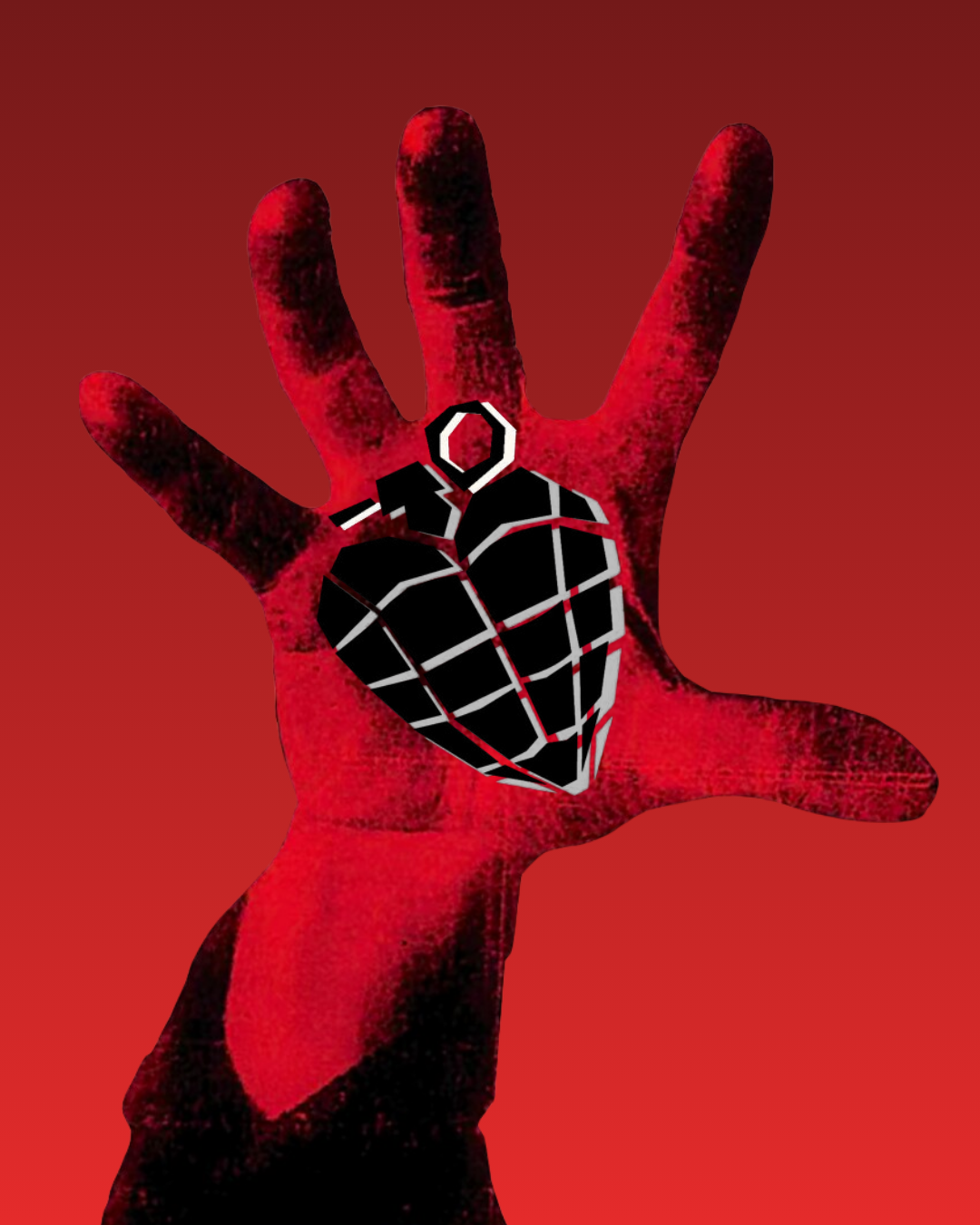
System of a Down
In 1994, four Armenian-Americans—Serj Tankian, Daron Malakian, Shavo Odadjian, and John Dolmayan—formed the neo-metal band System of a Down, who went on to pioneer the nu-metal genre. Armenian history is marked by violence: between 1915 and 1923, the Ottoman Empire forced Christian Armenians from their homes en masse, exposing them to death marches, starvation, and disease, resulting in over one million deaths. The Turkish government, along with other nations, still refuse to recognize this genocide, denying victims’ descendants any reparation or acknowledgment. These events deeply influenced the band and motivated them to write music against war, corporate greed, and injustice. This essay focuses on their hit song, B.Y.O.B.

B.Y.O.B – Bring Your Own Bombs
Released in 2005, the song’s title plays on the acronym Bring Your Own Booze, here meaning Bring Your Own Bombs. This word play creates a vivid image of governments treating war like a party from which they benefit. At the time, the US and allied forces had been fighting in Afghanistan and Iraq for years, amid widespread propaganda and Islamophobia, especially after 9/11. The lyrics “Still, you feed us lies from the tablecloth” expose those in power for sending soldiers to risk their lives under false pretences. The chorus, “everybody’s coming to the party, have a real good time,” echoes the title’s irony. Like “Fortunate Son,” it questions the privilege of higher social status: “why do they always send the poor? // why don’t presidents fight the war?” over heavy, thrashing music.
Shortly after the song’s release, System of a Down appeared with Johnny Knoxville on SNL. They refused to censor the lyrics for live TV and played the song as written, with Malakian adding an extra “fuck yeah!” As a result, they were banned from appearing on the show again. Both sides of the government criticized the song and the album Mesmerize, yet the tracks remain some of the greatest modern protest songs to date. The band has recently had a renaissance in my personal listening library, their topics still ringing true today, raising the question: has anything really changed, or is history just repeating itself?
Between 2001 and 2021, at least 176,000 Afghanis died fighting against or as a result of US occupation. From 2003 to 2011, up to one million Iraqis lost their lives. The US government has been accused of corruption and illicit oil deals worth billions, though nothing has been officially confirmed.

Above – Devastation in Iraq.
Working Class Hero – John Lennon / Green Day
As mentioned in my introduction, Working Class Hero marks the start my protest music journey. It wasn’t the first protest song I’d heard, but the first I truly related to, being from a working-class background.
Originally released in 1970 by John Lennon, it denotes a bleak view of class inequality, emphasizing the carrot dangled before them: “There’s room at the top, they are telling you still. But first you must learn how to smile whilst you kill.” My interpretation has always been that opportunity exists but is rarely equal, and those “on The Hill” won’t always be honest, especially if they see you as useful.
In 2007, Green Day gave the song a punk reboot, releasing it on the album Instant Karma: The Amnesty International Campaign to Save Darfur. The album features various John Lennon covers and supported the Make Some Noise campaign, which raised eight million dollars for aid and awareness in the West. The accompanying video caught my attention, featuring survivors of the Darfur genocide telling their harrowing stories and sharing hopes for the future: “One day, I will open my eyes and see a peaceful Darfur.”

The Darfur Genocide
The Darfur genocide, the first of the 21st century, spanned from 2003 to 2020. After Sudan gained independence from the Anglo-Egyptian Condominium in 1958, civil war broke out between the Arab Muslim north and the African Christian south. Though it was agreed both regions would be governed separately, the north ultimately gained more power, leaving the south underrepresented, underfunded, and segregated. This imbalance led to another civil war starting in 1972, causing famine and devastation in a region ill-equipped to thrive.
In 1989, General Omar al-Bashir rose to power, favouring Arab Muslims and banning all other political parties. The government armed northern groups, who took over parts of Western Sudan after discovering oil and other resources, displacing nomadic peoples and denying them opportunities. By the early 2000s, armed rebel groups fought back, triggering violent counterattacks funded by the government. Arab militias wiped out entire villages, killing men and boys, raping women and girls, and burning shelters and wells to prevent rebuilding.

Above – Survivors of The Darfur Genocide featured in the music video.
In 2004, the US declared a genocide was underway in Darfur and pushed for intervention. A brief ceasefire and peacekeeping operation followed in 2006, but al-Bashir rejected peace talks, and the violence continued. In 2009, he was indicted by the ICC for crimes against humanity, but the charges were ignored. The conflict raged on for another decade until riots sparked by corruption led to al-Bashir’s removal and arrest in 2019. He was sentenced to two years in prison for money laundering and reportedly is currently hospitalized for a heart condition.
The damage to Darfur is immense, making rebuilding difficult and preventing displaced people from returning to their former homes. An estimated 400,000 people died during the genocide.
Honourable Mentions
- American Idiot – Green Day
- Prison Song – System of a Down
- War? – System of a Down
- Killing in the Name – Rage Against the Machine
- Zombie – the Cranberries
Coming Next: Free Palestine – Protest in the Present.
Free Palestine – Protest in the Present, will be the next and last instalment on this project.